Discovery List · 9 min read · June 1, 2026
10 Regional American Hot Sauces You've Never Heard Of (But Should Be Cooking With)
Regional American hot sauce is one of the most overlooked ingredients in the home kitchen — and if your spice shelf still only holds a bottle of the big red stuff, you're missing some of the most flavor-forward cooking tools made in the country. From a Houston craft house featured on Hot Ones to a Colorado pepper farmer growing chile at 5,000-foot elevation, American small-batch makers are producing sauces worth building entire weeknight meals around. Here are 10 you should know — organized by region — with the peppers, heat profile, and best uses for each.
- Answer-first takeaway: Every region of the U.S. has at least one small-batch maker using local peppers, fermentation traditions, or flavor pairings you won't find on a grocery shelf.
- Why it matters for cooking: Small-batch sauces are built for flavor, not shelf life — lower vinegar ratios, fresh-mashed peppers, and no artificial stabilizers mean they behave differently in a hot pan.
- Heat range covered: The 10 sauces below span from mild/fruity to face-warming, so there's a use for every dish and every palate.
- Regional pepper traditions: Several entries trace directly to protected regional ingredients like the Hatch Valley green chile of New Mexico or the datil pepper of St. Augustine, FL — peppers with centuries of culinary history behind them.
- Who these are for: Home cooks who want to actually cook with hot sauce — deglazing, marinating, finishing sauces — not just shake it tableside.
- Discovery gap: Most of these brands are unknown nationally but loved fiercely in their home states, which is exactly what makes them worth seeking out.
| Sauce / Brand | Region | Key Pepper(s) | Heat Level | Best Use |
|---|---|---|---|---|
| Yellowbird Habanero | Texas (Austin) | Habanero, carrot | Medium | Tacos, grain bowls |
| Bravado Spice Ghost Pepper & Blueberry | Texas (Houston) | Ghost pepper | Medium-Hot | Wings, glazes |
| Bravado Spice Serrano & Basil | Texas (Houston) | Serrano | Mild-Medium | Pizza, eggs |
| Dat'l Do-It | Florida (St. Augustine) | Datil | Medium-Hot | Seafood, chowder |
| Seed Ranch Umami Everyday | Colorado (Boulder) | Cayenne blend | Medium | Stir-fry, ramen |
| Seed Ranch Truffle Hound | Colorado (Boulder) | Habanero, truffle | Medium | Pasta, roasted veg |
| Flatiron Pepper Co. Habanero Flakes | Colorado (Rocky Mtn) | High-altitude habanero | Hot | Finishing, dry rubs |
| Chile Traditions Hatch Green | New Mexico | Hatch green chile | Mild-Medium | Eggs, enchiladas |
| Secret Aardvark Habanero | Oregon (Portland) | Habanero, roasted tomato | Medium | Burgers, sandwiches |
| Angry Goat Pepper Co. | Vermont (Bradford) | Various heritage | Varies | Cheese boards, soups |
TL;DR: These 10 regional American hot sauces prove that geography is flavor — each one is a cooking ingredient first, a condiment second.
The South and Southwest: Where American Hot Sauce Was Born
The Southern and Southwestern United States are ground zero for American hot sauce culture, and the small-batch scene here is the most mature in the country. Two states dominate: Texas, which produces some of the most ambitious flavor-forward craft sauces anywhere, and New Mexico, where an entire regional identity is built around a single pepper.
Yellowbird Foods — Austin, Texas
Yellowbird launched in Austin on a belief that hot sauce should be made with farm-fresh ingredients and nothing else [1]. Every bottle in the small-batch lineup is made in partnership with USA organic farmers [1]. The flagship Habanero sauce is deceptively smooth — the habanero heat is mellowed by carrot and citrus into something bright and drizzlable rather than punishing. It's the rare hot sauce that actually works as a finishing oil: swirl a tablespoon into roasted cauliflower pan sauce and it turns a weeknight side dish into something memorable. Heat lands in the medium range, making it the most approachable entry point on this list.
"This world's tastiest hot sauce made in Texas with farm-fresh, no bullsh!t ingredients, so you can drizzle as often & adventurously as you like." — Yellowbird Foods, brand mission statement [1]
Bravado Spice Co. — Houston, Texas
Bravado Spice was born and raised in Houston, TX — described by the company as "one of the most diverse cities in the United States, known for its food culture and hospitality" [2]. That multicultural DNA shows up directly in the sauce lineup. The Ghost Pepper & Blueberry sauce pairs intense ghost pepper heat with blueberry sweetness — the result is a medium-hot sauce that tastes like a savory compote and works brilliantly as a glaze for roasted chicken thighs [2]. The Serrano & Basil line surprised even skeptics: users describe it as a favorite on pizza, where the herb-forward heat cuts through fatty cheese [2]. Bravado uses natural, non-GMO ingredients throughout, avoiding artificial additives in favor of real, fresh components [2]. The brand has appeared on Hot Ones, giving it national credibility while staying rooted in its Houston identity.
Hatch Valley Green Chile Sauces — New Mexico
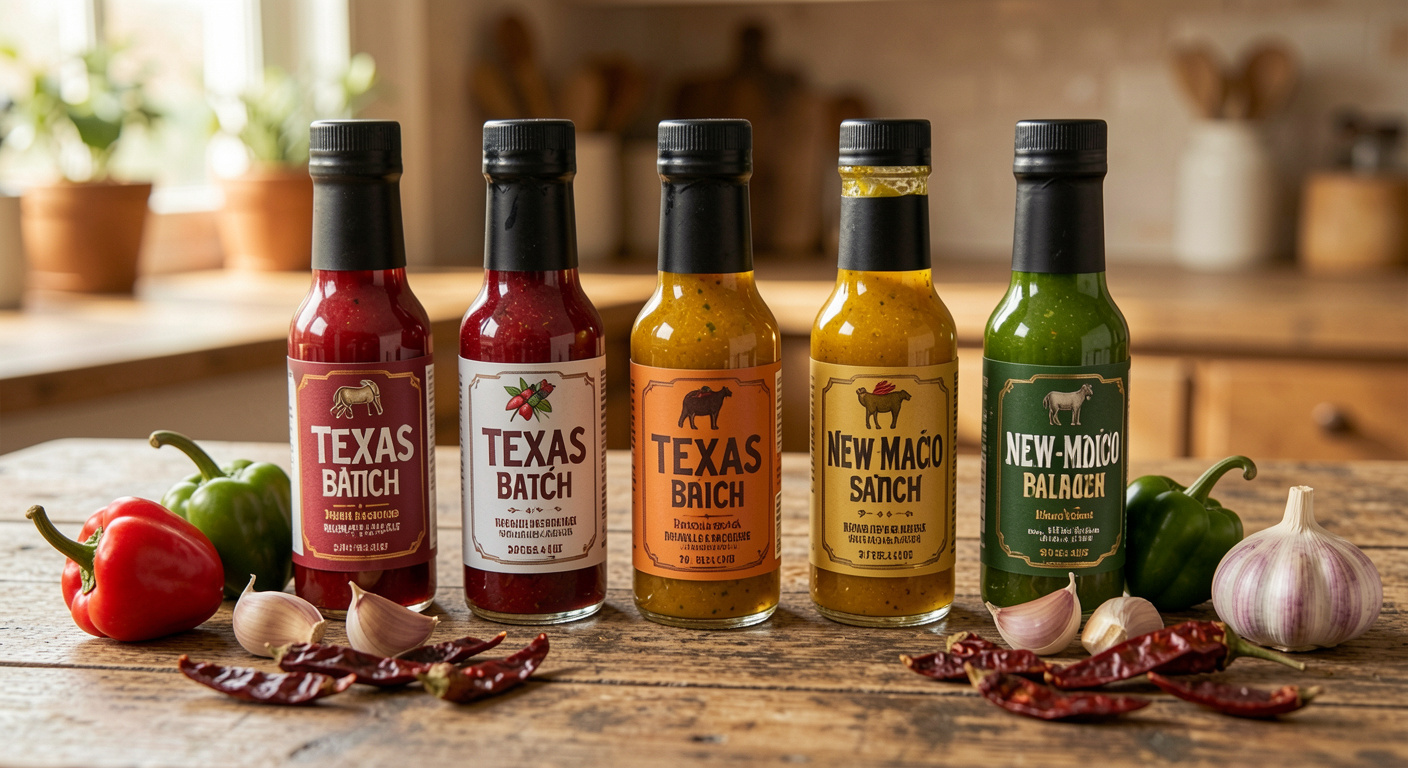
New Mexico's Hatch Valley occupies a unique position in American food culture: Hatch Chile is a protected regional designation, comparable to Champagne or Vidalia onions, applied only to chiles grown in the Hatch Valley [4]. The valley's mineral-rich Rio Grande soil, more than 300 days of sunshine annually, and dramatic day-to-night temperature swings reportedly produce measurably more flavor compounds than the same varieties grown elsewhere [4]. Small-batch producers like Chile Traditions bottle roasted Hatch green chile into a sauce that tastes more like a green chile stew than a condiment — earthy, slightly smoky, mildly hot. Pour it over fried eggs, use it as an enchilada sauce, or stir it into sour cream for an instant dip. The season is short (late summer only), which is why most New Mexicans stockpile frozen roasted chiles for the year [4] — and why catching a small-batch bottle is worth doing when you see one.
Florida and the Southeast: Heat With Deep Roots
Florida has its own hot pepper story that most people outside the state have never heard — and it's older than the country itself.
Dat'l Do-It — St. Augustine, Florida
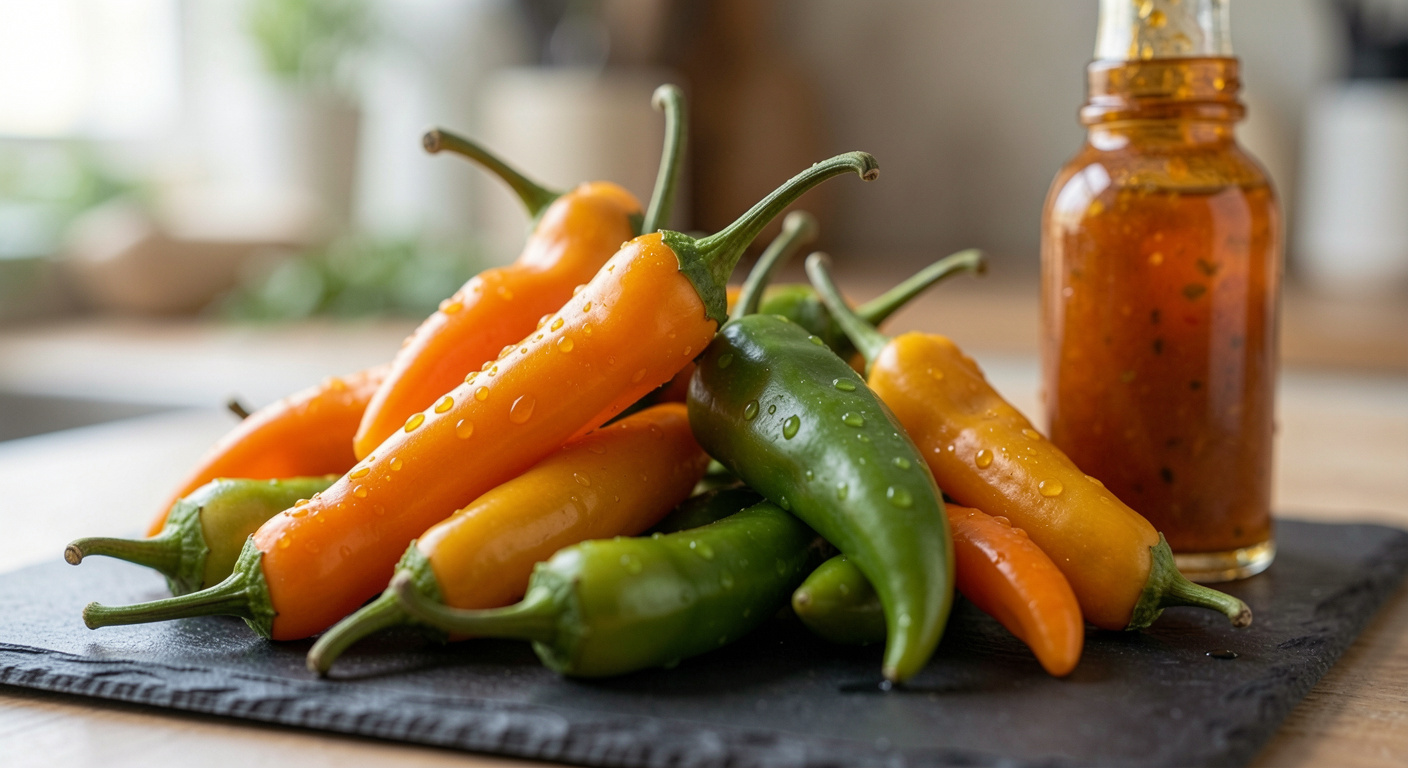
The datil pepper is the defining ingredient of St. Augustine's food culture, and it's almost entirely unknown outside of Florida. A small, golden-orange pepper belonging to the Capsicum chinense species, the datil has a sweet, tangy, and hot flavor profile unlike any other widely available pepper [3]. Its origin is contested: the most widely accepted story holds that it was brought to St. Augustine by Minorcan immigrants in the late 18th century [3]. Others trace it to Cuban traders or African slaves arriving via the West Indies [3]. What's not debated is the result — for more than two centuries, this pepper has been the backbone of Minorcan cuisine in St. Augustine, appearing in clam chowder, jellies, mustards, relishes, and hot sauces [3].
The datil was at one time even featured on the city seal of St. Augustine [3]. Today, Dat'l Do-It is the most famous commercial datil sauce — a ketchup-and-honey-based sauce that functions more like a complex seafood condiment than a standard hot sauce. Use it on shrimp, oysters, or anywhere you'd reach for cocktail sauce with more heat. In September 2013, St. Augustine officially designated the first Saturday in October as Datil Pepper Day in recognition of the pepper's cultural significance [3].
"The datil pepper is known as 'the pepper of St. Augustine' and was at one time featured on the city seal." — Florida's Historic Coast, official tourism bureau [3]
Secret Aardvark Trading Co. — Portland, Oregon
Secret Aardvark is a Pacific Northwest cult classic that splits the difference between a Caribbean-style habanero sauce and a roasted tomato salsa. The base of roasted habaneros and tomatoes creates a thicker texture that clings to a burger or sandwich instead of running off — which is exactly what makes it so useful as a cooking sauce rather than a table condiment. It's been a Portland farmers market staple before expanding to wider retail, and it remains independently produced. Use it as a taco sauce, burger topping, or stir it into mayo for an instant aioli that punches well above its weight. It also appears by name in the Hot Sauce Brand Database maintained by Heat Hot Sauce Shop [1].
The Rocky Mountains: Elevation Changes Everything
Colorado may not be the first state that comes to mind for hot sauce, but two Boulder/Denver-area producers have quietly built national cult followings by doing things differently from their Southern counterparts.
Seed Ranch Flavor Co. — Boulder, Colorado
Seed Ranch Flavor Co. makes small-batch, organic, non-GMO hot sauces from Boulder with a focus on savory complexity rather than pure heat [6]. Their approach — described by one reviewer as "gourmet profiles over simple burn" [6] — has produced sauces like Truffle Hound (habanero with black truffle) and Umami Everyday that read more like pantry staples than hot sauces. The company sources organic garlic and organic cumin to add depth and richness, ensuring each sauce maintains a clean, natural taste [6].
Umami Everyday is the one to start with: it has a layered savory quality that makes it the hot sauce equivalent of a splash of fish sauce — it doesn't announce itself but makes everything taste more itself. One devoted customer wrote that after buying a bottle in Portland years ago, they "could list off the ingredients like a regional sales rep" and spent years tracking it down after moving cross-country [6]. That's the kind of loyalty these sauces inspire.
For home cooks, Seed Ranch is particularly useful for building quick weeknight meals with fermented depth — the Umami Everyday is outstanding stirred into miso-butter pasta, used as a ramen finishing sauce, or whisked into vinaigrette.
Flatiron Pepper Co. — Rocky Mountain Region, Colorado
Flatiron Pepper Co. takes a different angle entirely: rather than bottled sauces, they specialize in premium pepper flake blends featuring varieties like habanero, ghost pepper, Carolina Reaper, Scotch Bonnet, Hatch green chile, and Moruga Scorpion [5]. What sets their product apart is the growing methodology — peppers cultivated at elevations above 5,000 feet experience unique growing conditions that concentrate flavor compounds differently than low-altitude crops [5]. The result is flakes with a brighter, more aromatic heat profile. Their Habanero blend is the most cooking-friendly: sprinkle it into dry rubs, bloom it in oil at the start of a braise, or use it anywhere a recipe calls for "red pepper flakes" and watch the dish become three-dimensional.
If you want to understand what you're actually working with on a chemical level, the Scoville guide for home cooks gives a full breakdown of how capsaicin concentration differs by pepper variety and growing condition.
Northeast and Midwest: Craft Culture Meets Heritage Farming
The Northeast and Midwest may not have the pepper-growing heritage of the Southwest, but they've developed their own small-batch hot sauce identity — one built on heritage fermentation, local sourcing, and old-world flavor traditions.
Angry Goat Pepper Co. — Bradford, Vermont
Angry Goat Pepper Co. operates out of Bradford, Vermont, and has developed a range of sauces under multiple sub-brands including Vermont Epicurean and Parker's Gourmet [1]. Vermont's short growing season pushed the team toward creative fermentation and aging techniques — the resulting sauces have a rounded, complex heat that works exceptionally well with dairy-forward dishes (cheese boards, cream sauces, potato gratins) in ways that more vinegar-forward Southern-style sauces don't. If you've only ever reached for hot sauce on eggs and tacos, an Angry Goat sauce on a good cheddar with crackers will reframe what this condiment can do.
Gindo's Spice of Life — St. Charles, Illinois
Gindo's is a Chicago-area maker with a Midwest-farmer approach to sourcing: peppers are locally sourced when in season, and the sauces are produced in small batches that reflect the growing year rather than a standardized formula [1]. The lineup ranges from a garlic-forward mild to scorching ghost pepper blends. What makes Gindo's particularly useful for weeknight cooking is the mid-range "Original" sauce — it has enough body to work as a braising liquid additive, enough acid to use as a marinade base, and enough heat to finish a bowl of soup without overwhelming it.
Galena Canning Co. — Galena, Illinois
Galena Canning takes a small-town Midwest approach: small batches, seasonal sourcing, and a product line that includes hot sauces alongside pickles, jams, and other preserved goods [1]. The result is a hot sauce that thinks like a preserve — the vinegar is balanced, the heat is restrained, and the vegetable character of the pepper comes through more clearly than in most options at this price point. It's the kind of sauce that makes sense in a pot of beans or stirred into a winter soup, and it's almost entirely unknown outside Illinois.
How to Actually Cook With These Sauces
Buying a small-batch hot sauce and shaking it onto food after cooking is the condiment equivalent of buying good olive oil and using it only as a dip. These sauces are cooking ingredients. Here's a quick reference for when to deploy each style:
| Technique | Best Sauce Style | Example Brands | What It Does |
|---|---|---|---|
| Deglaze a pan | Vinegar-forward, medium heat | Yellowbird Habanero | Adds acid + pepper flavor to fond |
| Whisk into marinade | Fruity, medium heat | Bravado Ghost & Blueberry | Tenderizes + adds char-sweet glaze |
| Stir into braising liquid | Fermented or umami-style | Seed Ranch Umami | Deepens background savory notes |
| Finish a bowl (ramen, soup) | Bright, clean heat | Secret Aardvark | Adds heat without muddying broth |
| Dry rub or spice blend | Flakes, dried format | Flatiron Pepper Co. | Even heat distribution on protein |
| Regional condiment pairing | Sweet-tangy, ketchup-base | Dat'l Do-It | Seafood, chowder, shellfish |
Learning to think about hot sauce as a cooking tool — not just a table condiment — completely changes how much value you get from a good bottle. For a deeper dive on technique, our guide to cooking with hot sauce on weeknight meals walks through eight specific methods with timing and temperature guidance. And if you're curious about what actually separates a $12 small-batch bottle from a $3 grocery store option, the breakdown on small-batch vs. mass-market sauces explains the ingredient, fermentation, and processing differences in plain language.
Every sauce on this list represents a real place, a real pepper tradition, and a real person making decisions about ingredients that a food conglomerate wouldn't. That's the entire point of regional small-batch hot sauce — the flavor tells you something about where it came from.
At Saucify, we ship a different small-batch artisan hot sauce every month, paired with two tasting cards: one covering the Scoville rating, pepper origin, flavor notes, and producer story, and one with two recipes built specifically around that sauce. If discovering sauces like these — and actually cooking with them — sounds like your kind of thing, subscribe for $24/month, cancel anytime.
Frequently asked questions
What is the datil pepper and why is it only found in St. Augustine, Florida?▾
The datil pepper is a golden-orange Capsicum chinense variety with a sweet, tangy, and hot flavor. It's believed to have been brought to St. Augustine by Minorcan immigrants in the 18th century, and centuries of local cultivation have made it deeply tied to the city's identity. While datil peppers are now grown elsewhere, the vast majority are still produced in St. Augustine.
What makes Hatch green chile different from other green chile?▾
Hatch Chile is a protected regional designation for chile grown exclusively in New Mexico's Hatch Valley — similar to Champagne's geographic protection in France. The combination of mineral-rich Rio Grande soil, 300+ days of sunshine, and dramatic temperature swings is credited with producing a distinctly earthy, slightly smoky flavor profile.
How do you cook with small-batch hot sauce instead of just using it as a condiment?▾
Small-batch sauces work best as active cooking ingredients: use vinegar-forward styles to deglaze a pan, whisk fruity sauces (like Bravado Ghost & Blueberry) into marinades for a sweet-heat glaze, or stir an umami-style sauce like Seed Ranch into braising liquid. The lower artificial-additive content of small-batch sauces means they behave better at high heat than mass-market brands.
Is Seed Ranch Flavor Co. actually from Florida?▾
No — Seed Ranch Flavor Co. is based in Boulder, Colorado, not Florida. The brand focuses on organic, non-GMO small-batch sauces with savory, umami-forward flavor profiles. Some early retail exposure in Portland, Oregon gave it a Pacific Northwest cult following before it expanded nationally.
What's the difference between Yellowbird and Bravado Spice Co.?▾
Both are Texas-based craft hot sauce makers, but they're stylistically different. Yellowbird (Austin) makes bright, fruit-and-pepper blends with a smooth drizzlable consistency built for everyday use. Bravado Spice (Houston) leans into bolder ingredient combinations — ghost pepper with blueberry, serrano with basil — reflecting Houston's multicultural food culture. Bravado has also appeared on Hot Ones, giving it a broader national profile.
Where can I buy these regional small-batch hot sauces?▾
Most are available directly from each brand's website, and some have expanded into specialty retailers or Amazon. However, many small-batch producers sell out quickly — especially seasonal varieties like Hatch green chile sauces. A hot sauce subscription box is one of the easiest ways to regularly discover and receive regional small-batch sauces without having to track each one individually.
Sources
- Yellowbird® Small Batch Hot Sauce | Yellowbird Foods
- Craft Hot Sauces | Black Garlic, Miso & More | Bravado Spice Co.
- The Datil Pepper: A History of Heat and Flavor in St. Augustine | Florida's Historic Coast
- Order Hatch Green Chile — Hatch Chile Store
- Flatiron Pepper Co: Specialty Pepper Producer Explained | Alibaba Spice Basics
- Seed Ranch Flavor Co. — SCOVILLED
- Datil Pepper — Wikipedia
- Hot Sauce Brand Database | Heat Hot Sauce Shop
Keep reading
Ready to see it for yourself?
Back to home →